
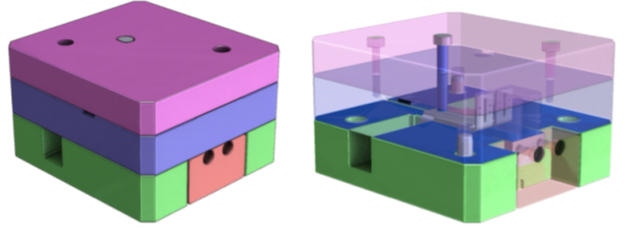
In the automotive sector, electrical power distribution components such as busbars play a critical role in ensuring reliable, safe, and compact energy transfer. When a customer approached us to design and prototype a new lead busbar terminal with enhanced conductivity and insulation, the project required a complete product development cycle — from material selection and CAD modelling to die manufacturing, prototyping, and testing.
This article walks through how our team transformed a concept into a fully validated prototype batch of 100 pre-production samples, ready for mass manufacturing.
1. Understanding Customer Requirements
The customer’s requirement was clear:
- Develop a high-conductivity copper busbar for an automotive application.
- Design a thermally and electrically insulating cover for safe operation.
- Ensure reliable pin engagement, proper terminal interface, and ease of installation.
- Deliver prototype samples for functional and fitment testing.
- Validate feasibility for predictable and repeatable mass production.
From the start, the focus was on balancing electrical efficiency, structural strength, manufacturability, and insulation safety.
2. Design & Material Selection
Engineering CAD Model
Using SolidWorks 2019, our PDE team created a complete 3D model of the busbar and insulating cover.
The geometry of the terminal pins was optimised to:
- Achieve accurate alignment
- Ensure a reliable spring-lock mechanism
- Support easy insertion and removal
- The insulating cover included a pocket feature for improved usability.
Why EC Grade 1100 Copper?
The busbar needed high electrical conductivity and corrosion resistance.
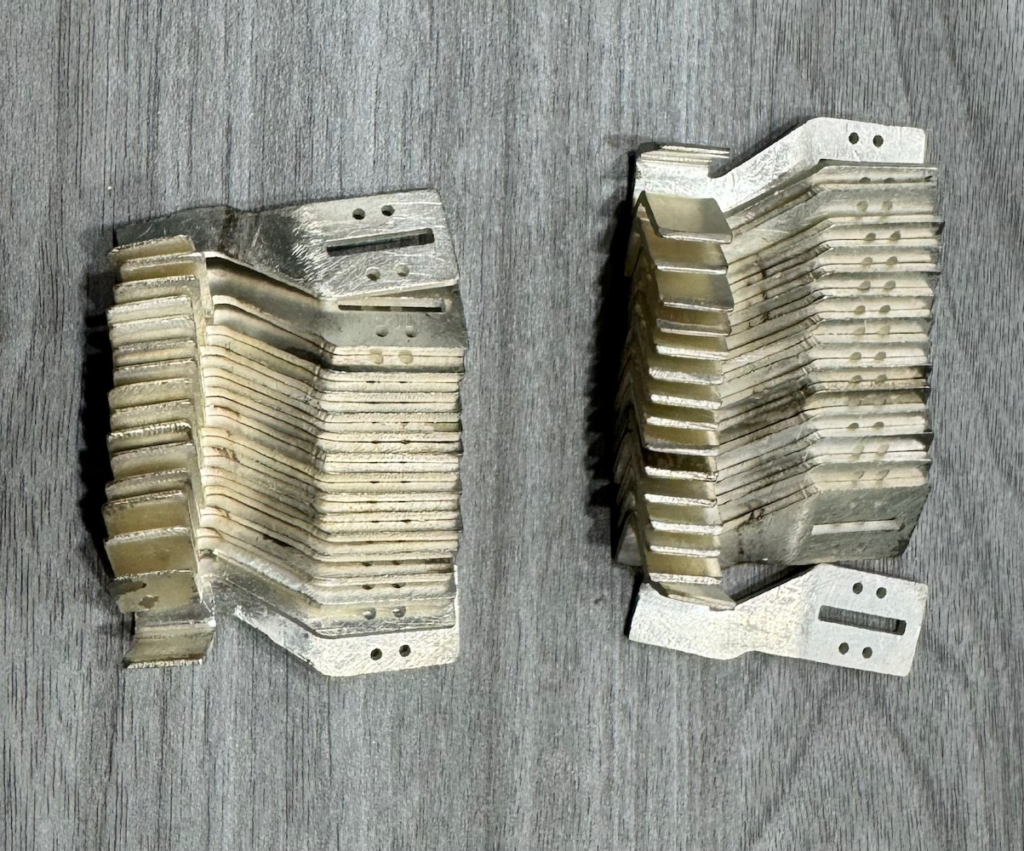
EC Grade 1100 Copper, enhanced with tin coating, offered:
- Excellent conductivity
- Oxidation resistance
- Good formability for bending and shaping
Why PA16 + 30% GF for the Insulation?
For the over-moulded cover, PA16+30% Glass-Filled was chosen for:
- High thermal resistance
- Excellent electrical insulation
- Mechanical rigidity
- Feasibility for high-volume injection moulding
The combination ensured a robust yet manufacturable design suitable for automotive environments.
3. Manufacturing Processes
Three major manufacturing routes were involved:
A. Machining the Busbar
- Blanking
- Bending
- Edge preparation
Custom dies were required to achieve tight tolerances, consistency, and repeatability.
B. Over-Moulding
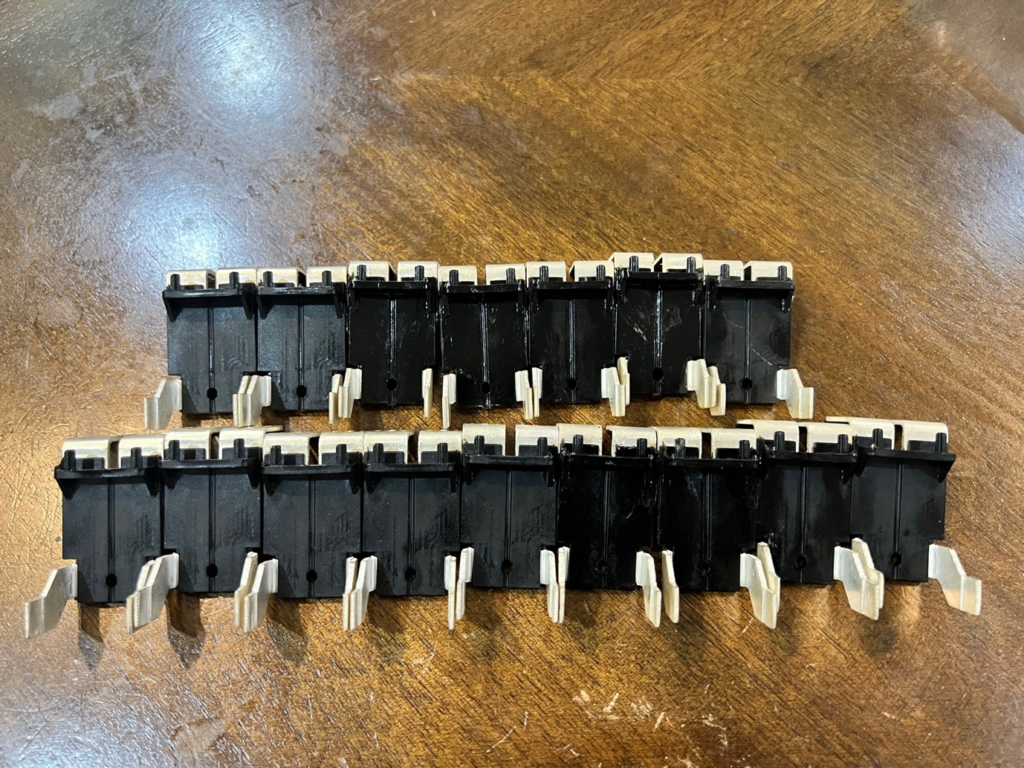
The insulating cover was produced through manual injection moulding during prototyping.
C. Dies & Tools Developed
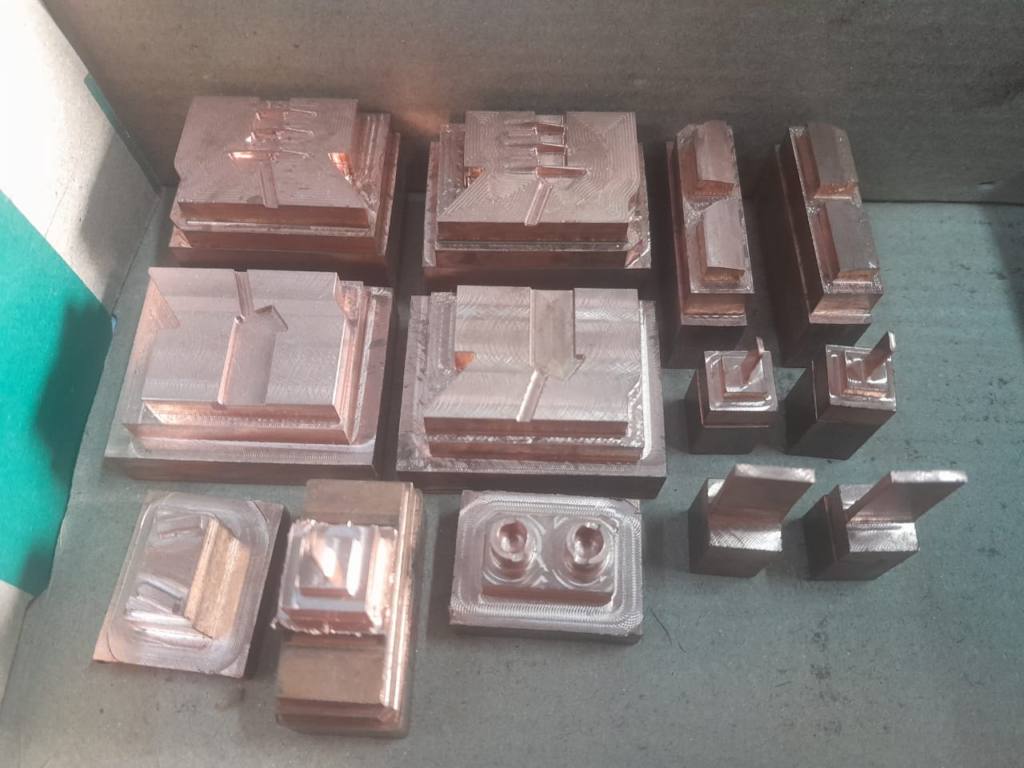
To support the process, we designed and manufactured:
- Blanking die – HSS
- Bending die – HSS
- Injection mould – HNS
- EDM tools – Copper
- 3D-printed go/no-go inspection jigs
These tools ensured that each busbar maintained dimensional accuracy before and after moulding.
4. Prototype Development & Pilot Batch
A pilot batch of 100 prototypes was produced for testing. Each part underwent:
- Dimensional inspection
- Fitment verification
- Coating quality check
- Terminal engagement testing
The inspection reports showed all samples within the permissible tolerances, validating both the tooling and process.
5. Outcomes Delivered to the Customer
By the end of the 3-month engagement, we delivered:
- Complete 3D and 2D CAD design packages in the customer’s native CAD format
- 100 fully functional prototype busbars
- Inspection reports and test documentation
- Complete feasibility data for scaling to mass production
The customer used these prototypes for assembly trials, electrical qualification, and performance benchmarking.
6. Why Prototyping Matters in Product Development
This project demonstrates how effective prototyping bridges the gap between design intent and production reality:
- Validates materials before mass manufacturing
- Highlights design refinements early
- Ensures compatibility with downstream processes
- Prevents costly late-stage rework
- Reduces time to market
In the automotive sector, where reliability and precision are non-negotiable, prototyping is not optional — it is fundamental.
Conclusion
End-to-end Product Prototyping enabled the seamless transformation of a concept into a validated, high-performance lead busbar ready for mass production. Trusted Product design companies in India play a key role in accelerating innovation with precision, reliability, and manufacturability.
The Lead Busbar project is a strong example of how a structured concept–prototype–validate process can accelerate product development. Through smart material selection, precision tooling, CAD-to-manufacturing integration, and iterative testing, we ensured the customer received a production-ready solution with proven performance.
If you are looking to develop or prototype electromechanical components, tooling, plastic over-moulded parts, or custom precision assemblies, our team can support you across the entire product development lifecycle.