
As the demand for electric vehicles, renewable energy storage, and high-performance consumer electronics surges, the thermal management of Lithium-ion (Li-ion) battery packs has never been more critical. Graphler Technology Solutions specializes in end-to-end product engineering, offering structural analysis (FEA) and fluid and thermal simulation (CFD). In this case study, we explore how utilizing advanced CFD and FEA techniques can dramatically reduce development risks, identify thermal hotspots, and optimize the thermal performance of Li-ion battery packs.
The Engineering Challenge
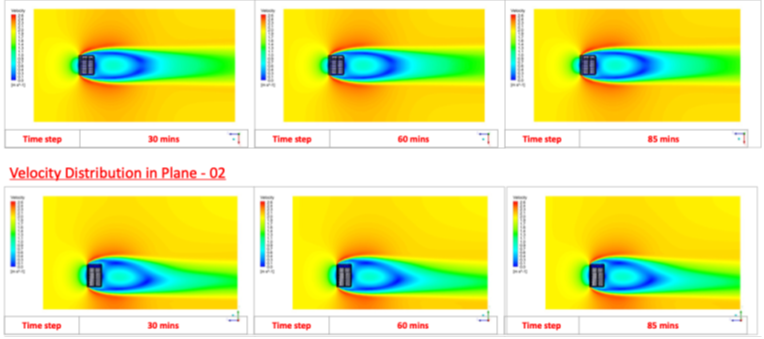
In high-energy applications, battery cells, MOSFETs, and PCBs generate substantial heat during rapid charging and discharging cycles. Without efficient cooling and airflow behavior, this thermal load can lead to degraded battery life, localized hotspots, and severe safety risks. Our recent scope of work involved a comprehensive thermal CFD analysis of a Li-ion battery pack to evaluate its temperature distribution and cooling effectiveness under both charging and discharging conditions.
The primary objectives were to assess the overall airflow behavior, identify thermal risk zones, and objectively compare a base design against an optimized design configuration.
Our Simulation Approach: Leveraging CFD and FEA
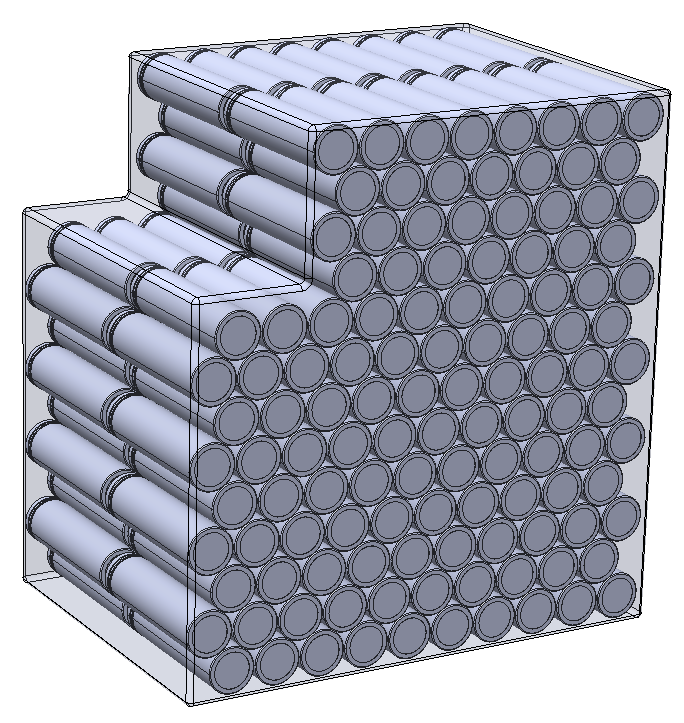
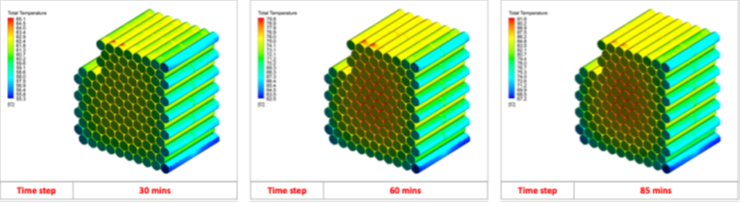
To tackle these complex thermal challenges, a multidisciplinary approach combining computational fluid dynamics (CFD) and structural analysis (FEA) is essential. For this analysis, our engineering team evaluated conjugate heat transfer—simultaneously accounting for solid and fluid thermal behaviors—under transient conditions over 30, 60, and 85-minute intervals.
We accurately modeled the material properties of the battery pack components, integrating data for ABS-Fr, PVC, Aluminum, and thermal pads. By defining precise thermal loads for the 240 battery cells and the MOSFET heat sinks, we extracted highly detailed temperature and velocity contour plots. This visual and quantitative data allowed us to iteratively improve the design to reduce peak temperatures and improve temperature uniformity across the entire system.
Iterative Design Validation
Using CFD and FEA software allows teams to completely visualize velocity distributions and temperature gradients in various planes before ever cutting a single piece of physical material. Our process involves comparing base designs with revised designs to definitively measure the ΔT (temperature difference) and validate optimization assumptions.
Key Results: Base Design vs. Optimized Design
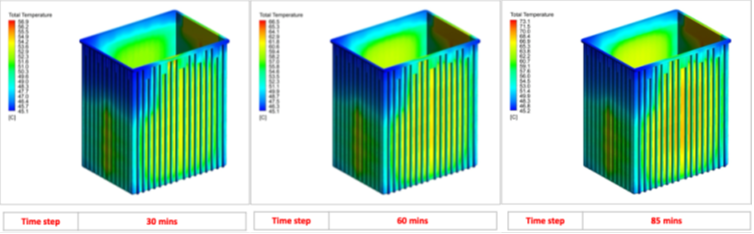
The CFD analysis successfully identified critical hotspots in the base design and provided the necessary data to implement an optimized configuration. The comparative results, particularly at the extreme 85-minute discharging mark, highlight the power of thermal simulation:
| Component | Base Design (85 mins) | Revised Design (85 mins) | Temperature Improvement (ΔT) |
|---|---|---|---|
| Cells | 98°C | 90°C | 8°C Reduction |
| MOSFET / PCB | 196°C | 175°C | 21°C Reduction |
| Bottom Cover | 93.9°C | 73.1°C | 20.8°C Reduction |
| Battery Lid | 124.7°C | 64.7°C | 60°C Reduction |
The most dramatic improvement was observed in the battery lid, where the optimized design reduced temperatures from a dangerous 124.7°C down to a highly stable 64.7°C—a staggering 60°C temperature difference. Similarly, the maximum notified temperature on the sensitive MOSFET/PCB components was mitigated by a crucial 21°C.
Conclusion
These findings underscore the immense value of integrating Thermal CFD and FEA simulations early in the product development lifecycle. By proactively analyzing airflow behavior, velocity distributions, and conjugate heat transfer, engineers can eliminate critical hotspots, validate design changes virtually, and industrialize high-performance products faster.
At Graphler Technology Solutions, our multidisciplinary engineering capabilities combine CFD, FEA, and product engineering expertise to support complex simulation requirements. Our CFD Consulting Services and FEA Services help businesses optimize products across industries, including EV battery packs, energy storage systems, heat exchangers, electronics, and other high-performance applications.