CFD CASE STUDY/HEAT TRANSFER EQUIPMENT
Heat-exchanger CFD: comparing baffle designs
Examining how internal baffle arrangements influence shell-side mixing in a shell-and-tube heat exchanger.
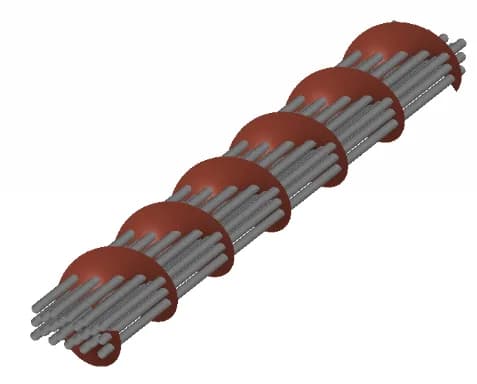
Original geometry from the archived study
- Equipment
- Shell-and-tube heat exchanger
- Method
- CFD comparison
- Design variable
- Baffle arrangement
- Finding
- Qualitative mixing distribution
01 / THE DESIGN QUESTION
Look beyond the tube bundle to the flow around it
In a shell-and-tube heat exchanger, the baffle arrangement influences how shell-side fluid moves around the tubes. GTS used CFD to compare two baffle designs and examine differences in the distribution of turbulence within the exchanger.
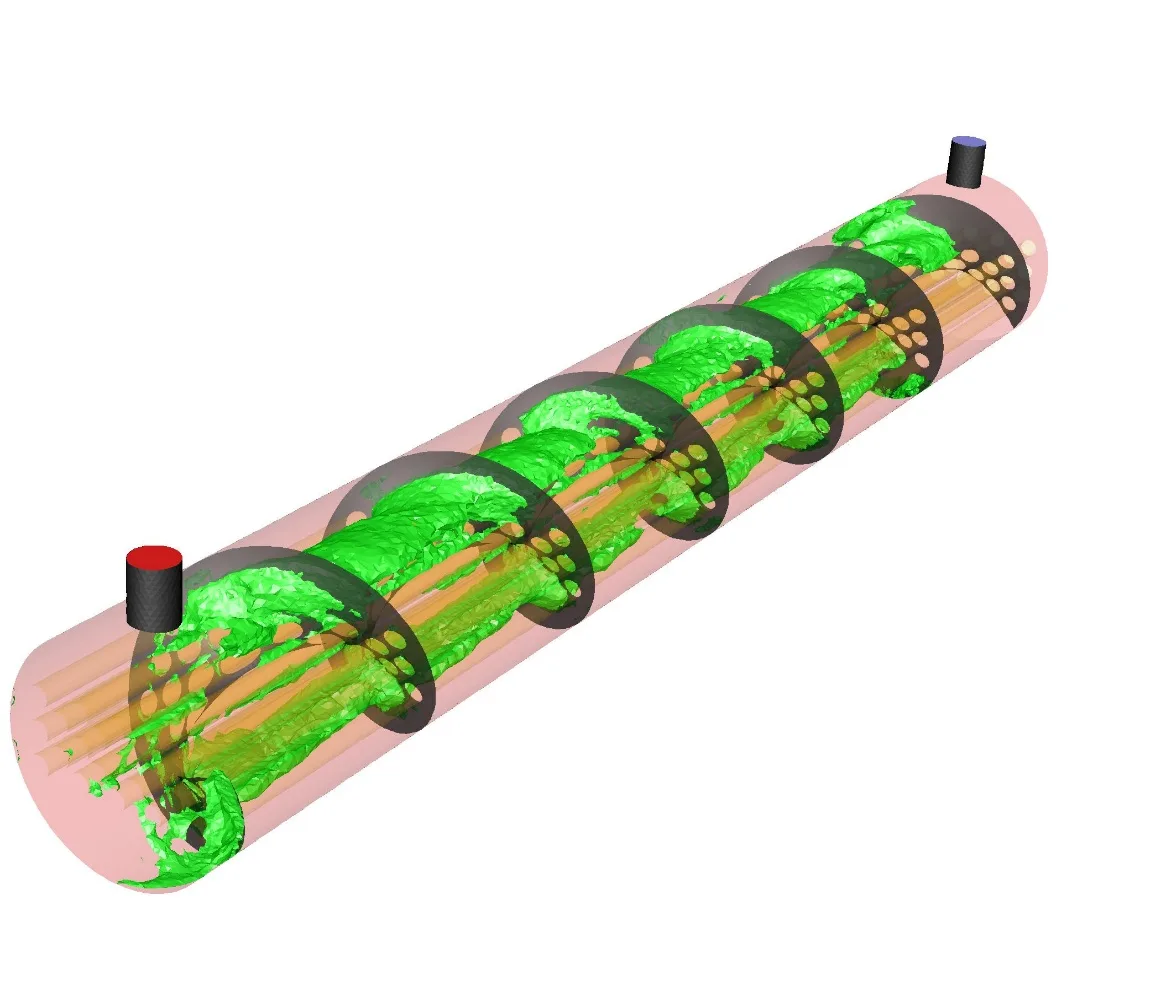
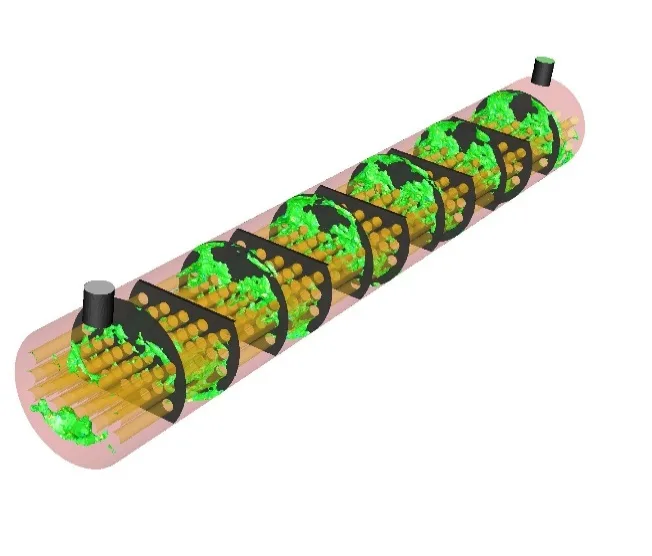
The archived study considers helical and circular baffle arrangements. Its focus is the flow behaviour created by these internal features: whether mixing is distributed through the tube bundle or concentrated in particular regions.
The engineering question was therefore specific: how does changing the baffle arrangement affect the pattern of shell-side mixing?
02 / THE CFD APPROACH
Compare the internal layouts and their flow response
The study presents two tube-and-baffle geometries, a computational mesh and turbulence visualisations. Together, these show how CFD was used to examine behaviour inside the exchanger that would be difficult to assess from the external geometry alone.
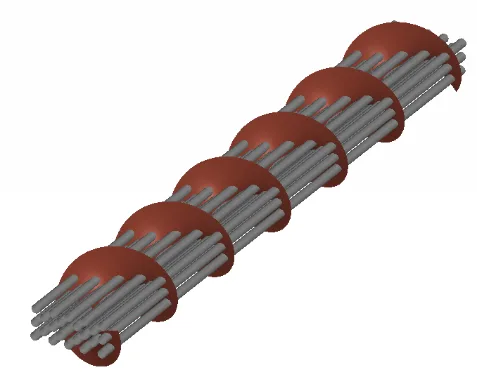
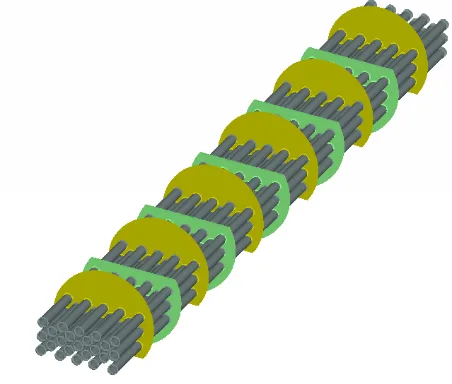
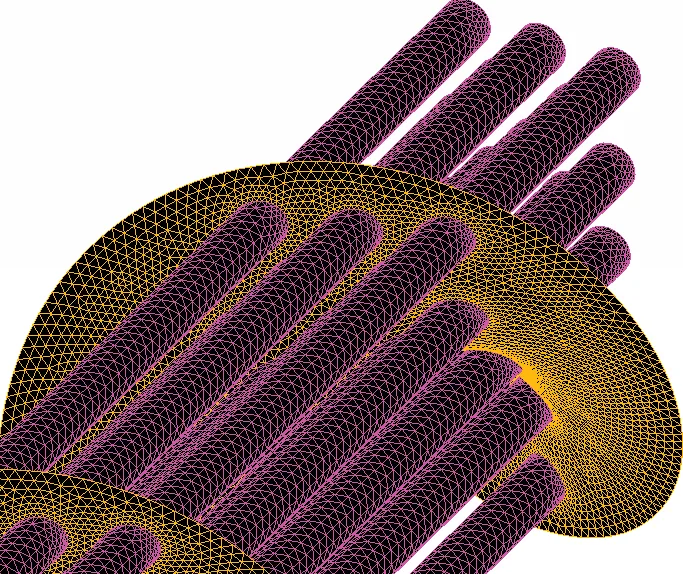
The results are presented in terms of turbulent eddy dissipation. This is a turbulence quantity, not a direct measurement of heat duty or exchanger efficiency. The retained images are used to explain the comparison qualitatively.
03 / REPORTED FINDINGS
A more distributed turbulence pattern with helical baffles
The source article reports that the helical arrangement produced a better cascading effect and a more uniform distribution of eddy dissipation within the domain. Its annotations also identify regions of weaker mixing and a lack of uniformity in the comparison.
This supports a design-level observation about the distribution of mixing. It does not establish a measured increase in heat-transfer rate, a reduction in pressure drop or a longer interval between cleaning.
| Assessment | Evidence available |
|---|---|
| Baffle alternatives | Two internal arrangements and a computational mesh are illustrated. |
| Mixing behaviour | The article reports more uniform eddy dissipation with helical baffles. |
| Thermal performance | No heat-duty comparison, outlet temperatures or efficiency gain is documented. |
| Fouling and pressure loss | No deposition-rate prediction, cleaning-interval result or pressure-drop comparison is supplied. |
04 / ENGINEERING VALUE
Use the flow insight to guide the next design decision
The value of this comparison is its view of the internal flow response. It gives the design team a basis for investigating how a baffle change redistributes mixing around the tube bundle.
A final design assessment would also need to establish thermal duty and pressure loss at the intended operating conditions. Fouling performance would require evidence suited to the actual fluids and deposition mechanisms; turbulence images alone cannot demonstrate a reduction in fouling.
Study scope
This case study is based on the archived GTS article and its original figures. Fluid properties, operating conditions, detailed solver settings and validation results are not supplied. The reported finding is therefore presented as a qualitative design comparison.
Graphler Technology Solutions
Engineering design, simulation and product development.
About our engineering team
YOUR NEXT ENGINEERING QUESTION
Assess your heat-exchanger design.
Share your exchanger geometry, fluids, operating conditions and design targets. We can help define a CFD assessment around your thermal and hydraulic questions.
Discuss a heat-exchanger projectExplore CFD services