CFD CASE STUDY/BUILT ENVIRONMENT
CFD assessment of thermal comfort in a large theatre
Examining air delivery and circulation to inform HVAC layout changes around the occupied seating areas.
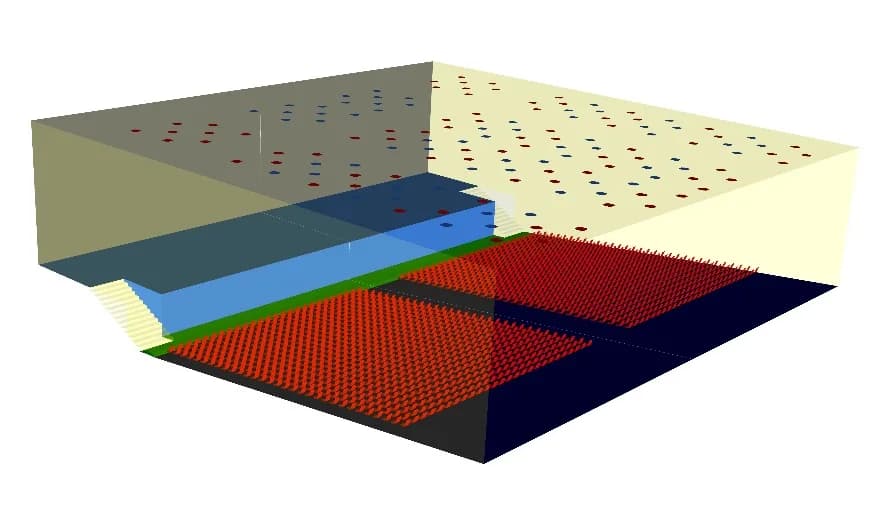
Original project model · auditorium and seating layout
How effectively does supplied air reach the occupied spaces?
Explore the findings- Application
- Theatre HVAC assessment
- Method
- Computational Fluid Dynamics
- Modelled occupancy
- Around 600 people
- Design focus
- Supply air and spill exhaust
01 / THE CHALLENGE
Understand air delivery where people sit
Graphler Technology Solutions used Computational Fluid Dynamics (CFD) to examine airflow and thermal behaviour in a theatre modelled at a full occupancy of around 600 people. The study informed proposed changes to the air-distribution system and spill-air exhaust serving the balcony and main seating area.
The auditorium included balcony, main seating and stall areas. Its occupied spaces and surrounding voids created different routes for the supplied air to travel through the building.
The engineering task was to understand those circulation patterns and review how the HVAC layout delivered air to the seating areas. The assessment considered the occupants and electronic equipment as part of the computational model.
02 / OUR APPROACH
Model the auditorium and its air-handling layout
The model represented the auditorium dimensions, air-handling arrangement and spill exhaust fans. The layout used symmetry about the building’s centreline to represent the corresponding sides of the space.
Air entered through overhead diffusers at the specified supply temperature and velocity. Return-air locations were also represented. The auditorium started at 33°C, and the study considered the cooling system operating over a 180-minute period.
Conditions defined for the study
- Modelled occupancy
- ~600people
- Supply-air temperature
- 20°C
- Supply-air velocity
- 8m/s
- Modelled cooling period
- 180minutes
The supply velocity is an inlet condition. The cooling period defines the studied interval, not a verified time to reach a comfort target.
Represent the occupied space
Include seating zones, occupants and equipment.
Define the air system
Represent supply, return and spill exhaust locations.
Review the flow pattern
Use the predicted circulation to guide layout changes.
03 / THE FINDINGS
Guide air towards the balcony and main seating
The CFD assessment informed a proposed reconfiguration of the air-distribution layout and spill-air exhaust fans. The numerical findings suggested improved air delivery towards the front balcony and main seating area.
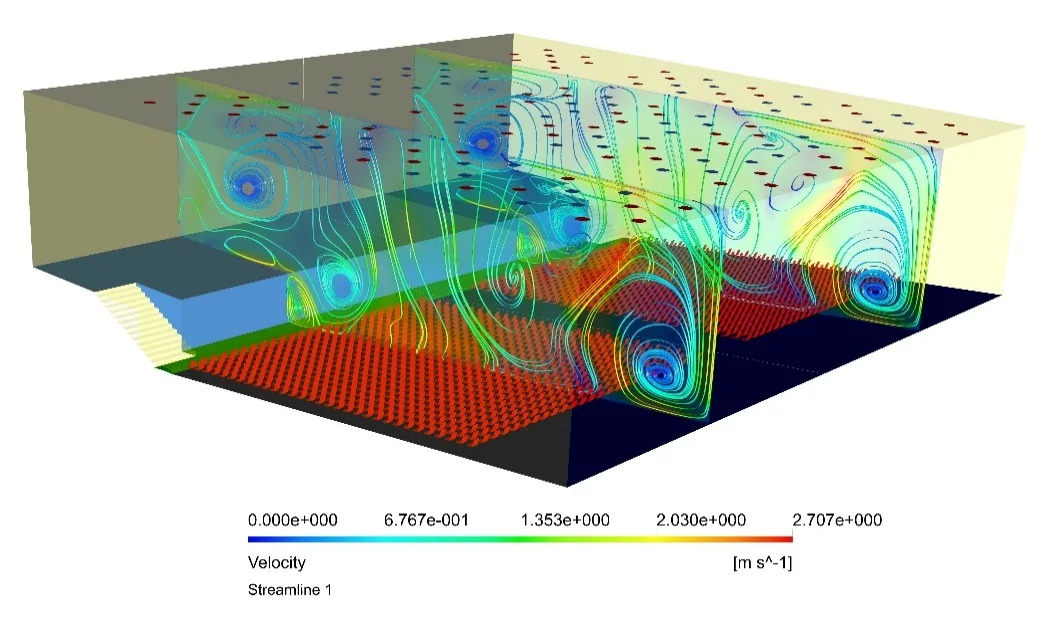
Review circulation across the occupied zones
The reported findings also described more moderate circulation in the void space, reduced air dumping and more moderate local temperature fluctuations following the proposed alterations. These were qualitative findings from the numerical study.
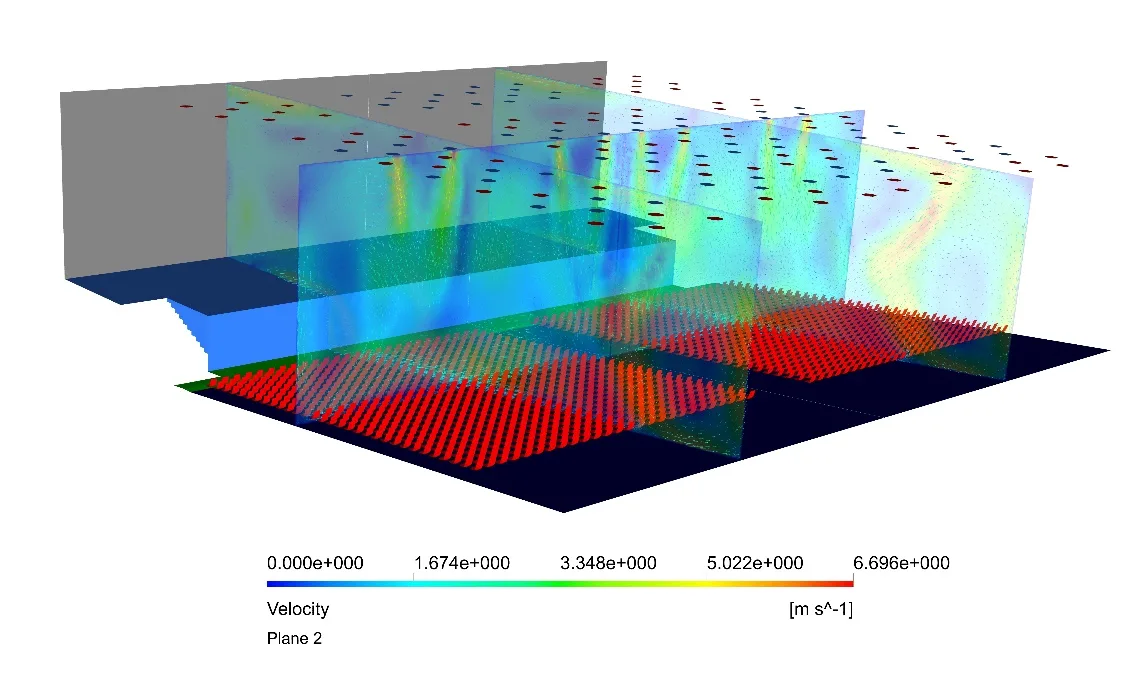
Review supply and exhaust as one air-distribution system.
The assessment connected the circulation in the auditorium with the proposed diffuser and spill-exhaust arrangement serving the seating areas.04 / ENGINEERING VALUE
Use the flow field to inform the HVAC layout
The study provided a basis for discussing where air was delivered and how it circulated around the balcony and main seating. Its practical contribution was guidance for proposed supply-air and exhaust changes within the auditorium layout.
Heat-load calculations complemented the airflow study, connecting the distribution review with the auditorium’s cooling requirement.
Assessment scope
These are numerical findings for the stated model and conditions. They do not establish an installed retrofit outcome, a measured final room temperature or compliance with a quantified thermal-comfort criterion.
Graphler Technology Solutions
Engineering design, simulation and product development.
About our engineering team
YOUR NEXT ENGINEERING QUESTION
See how air moves
through your space.
Share the building geometry, occupancy, heat loads and proposed air-system layout. We can define a CFD study around the areas where airflow and comfort need closer attention.
Discuss an HVAC CFD projectExplore HVAC CFD services